The Hidden Productivity Drain Sitting Right Under You

Walk into any office and you'll see the same thing: workers hunched over keyboards, shifting uncomfortably in their chairs, rubbing their necks. It's so common we barely notice anymore. But here's what most business leaders miss: this isn't just a comfort problem. It's bleeding money from your bottom line every single day.

The Real Cost of Bad Seating

Research shows that up to 69% of office workers experience neck pain annually, while back pain affects between 31% and 51%. But pain is just the symptom. The real damage is happening to your productivity, your healthcare costs, and your ability to retain talent.

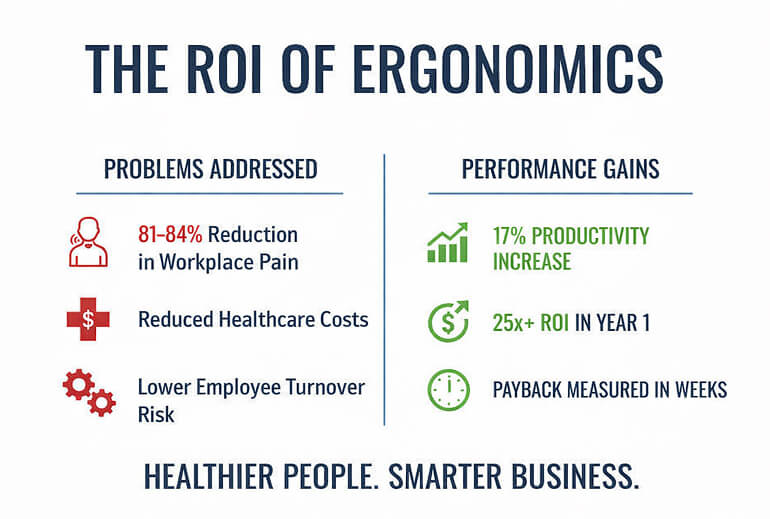
A landmark study tracking office workers over nearly two years found something remarkable: employees using ergonomic chairs combined with proper training saw productivity increase by 17%.

The Real Cost of Bad Seating

Why Your Heart Doesn't Care That You Exercise

Here's an uncomfortable truth that caught researchers by surprise.

A 2024 study analyzing nearly 90,000 people found that sitting more than 10.6 hours daily increased heart failure and cardiovascular death risk by 40-60%, even among people who exercise regularly.

The problem is metabolic. Prolonged sitting suppresses lipoprotein lipase activity, the enzyme that clears cholesterol and triglycerides from your bloodstream. Exercise helps, but it can't fully reverse this effect.

Every additional 2 hours of sitting adds 5% higher obesity risk and 7% higher diabetes risk. Each extra hour increases muscle wasting risk by 33%.


Your chair isn't just furniture. It's a health intervention.

Prevention Beats Treatment. Always.

A 2024 study tested whether the right seating could prevent pain before it starts. 
Researchers tracked high-risk office workers for six months and found that 

dynamic seating reduced neck pain development by 81% and low-back pain by 84%.

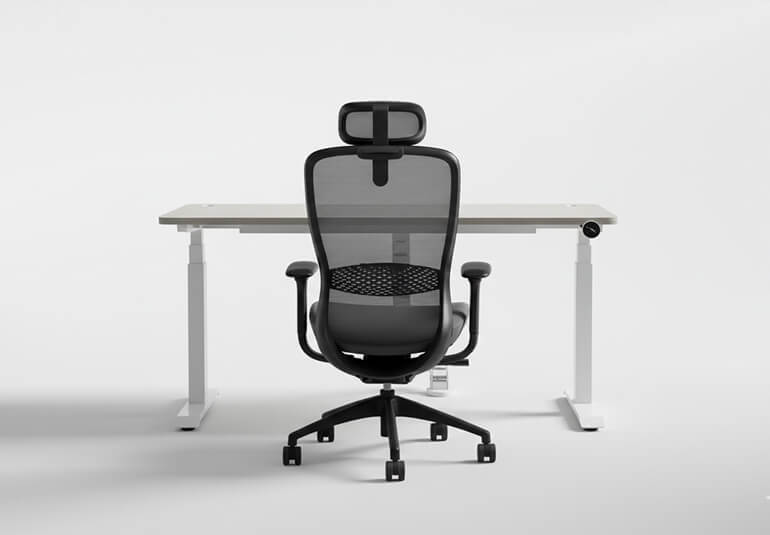
1. A Properly Adjustable Ergonomic Chair

A good ergonomic chair must adapt to the user—not the other way around.
 It should allow adjustment of:

  • Seat height
  • Backrest recline
  • Lumbar support depth
  • Armrest position
  • Seat tilt

Chairs with limited or fixed adjustments often fail to support healthy posture.

2. Correct Usage and Training

Even the best chair won’t help if it’s used incorrectly.
Short videos are not enough. Effective prevention requires:

  • Hands-on guidance on how to adjust the chair
  • Proper workstation setup
  • Posture awareness
  • Encouragement of regular movement and breaks

Ergonomic Chair
Right Chair For You

3. Workplace Support and Accessibility

Ergonomics should be easy, not complicated.
Organizations need to:

  • Make adjustments simple and accessible
  • Encourage movement breaks as part of daily work
  • Provide quick access to ergonomic support when needed

4. Ongoing Engagement and Follow-Up

Back pain prevention is not a one-time fix. 
Long-term success comes from:

  • Periodic check-ins and refreshers
  • Measuring comfort and health outcomes
  • Reinforcing good habits over time

What High-Performing Organizations Do Differently

They don't treat ergonomics as wellness theater. They treat it as business infrastructure.

They measure baseline metrics: pain surveys, productivity indicators, absenteeism rates, healthcare costs. They track at 3, 6, and 12 months. They share results with teams to build engagement.

They embed ergonomics into onboarding, making proper setup as standard as issuing a laptop.

They make getting help frictionless. No forms, no waiting, no asking permission.

The Bottom Line

Half your team is working in pain right now. That pain is costing you productivity, driving up healthcare expenses, and increasing turnover risk.

The solution isn't complicated. It's proven. The evidence spans multiple studies across different organizations and time periods.

Ergonomic seating combined with proper training delivers:

81-84% pain risk reduction

17% productivity gains that sustain beyond 12 months

25x+ return on investment in year one

Payback measured in weeks, not years

The only variable is implementation quality.

The math is clear. The research is conclusive. The question is simple: will your organization capture these benefits?

Ready to see what's possible? The first step is understanding your current baseline. Professional ergonomic assessment identifies where you stand and projects realistic outcomes based on your specific workforce characteristics. From there, the path forward becomes obvious.